Pet Stain Removal in Radcliff Kentucky
Pet accidents leave more than a visible mark. Urine and other waste soak through the carpet backing and into the padding below. Because those layers stay damp long after the surface dries, the stain can return and the odor can come back with it. Pile’s Carpet Care & Restoration Service provides pet stain removal in Radcliff Kentucky and the surrounding Hardin County area to treat the stain at every layer it has reached. To keep other soft surfaces fresh, see our carpet cleaning and upholstery cleaning services.
Why Pet Stains Are Different From Ordinary Spills
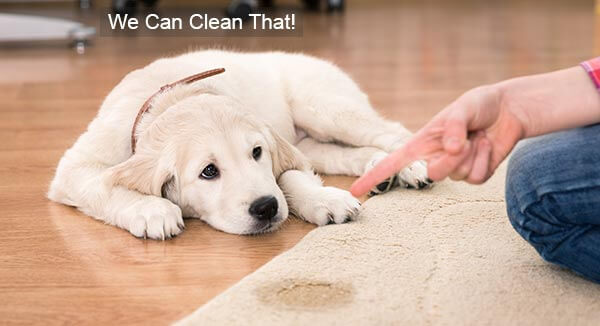
A spilled drink stays on the surface. Pet waste does not. Instead, it wicks downward through the carpet and into the padding and subfloor. Capillary action also pulls it sideways, so the stain below the surface is often larger than the visible spot. Because of that, treating only what you can see leaves the source of the problem untouched.
Why Pet Stains Are Harder to Remove in Radcliff Kentucky
The local climate and the nature of pet waste create specific challenges for stain removal.
Urine Bonds to Fibers
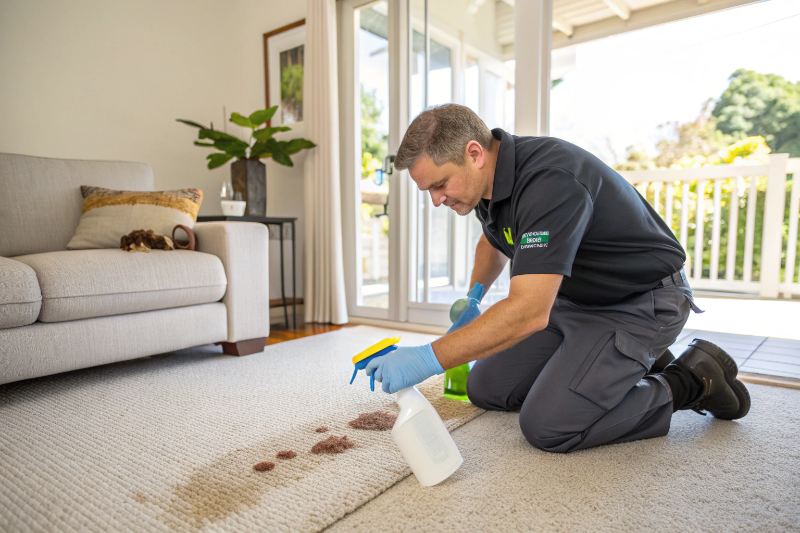
Urine contains uric acid crystals that bond to carpet fibers. Because those crystals are sticky, they attract soil and hold onto it. Over time, the stain darkens and becomes harder to remove with ordinary cleaning products.
Humidity Reactivates Stains
Summers in Radcliff Kentucky bring humidity that stays high for weeks. As a result, urine salts absorb moisture from the air and release odor compounds. This explains why a stain that seemed resolved in winter can smell strong again in summer.
Pet Stains Spread Below the Surface
Because urine is a liquid, it moves downward through the carpet and sideways through the padding. Consequently, the contamination often extends well beyond the visible discoloration.
Repeated Accidents Compound
When a pet returns to the same spot, the contamination layers build up. As a result, the stain becomes darker and the affected area expands.
Signs the Stain Has Soaked Below the Surface
Not every pet stain is the same. These signs point to contamination that has reached the padding or subfloor.
-
The stain reappears after cleaning — This indicates that residue remains below the surface.
-
The area feels stiff or crunchy — This happens when urine salts dry in place.
-
The odor returns when humidity rises — This confirms that urine crystals are still present.
-
The stain has a dark ring around the edge — This is a sign of wicking, which means the contamination has spread sideways.
-
Discoloration is visible from multiple angles — This indicates the stain has penetrated deeply.
If you notice more than one of these signs, surface cleaning alone won’t solve the problem.
How Professional Pet Stain Removal Works
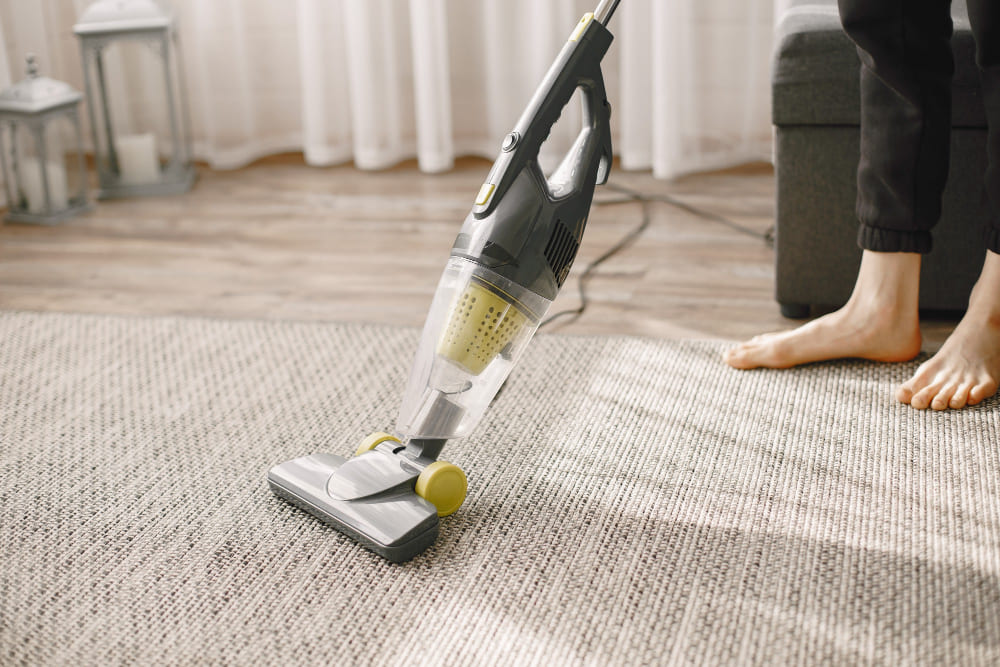
Effective treatment involves more than applying a spot cleaner. The process addresses the stain at every layer it has reached.
Inspection With UV Light
The first step is identifying every spot where accidents have occurred. Because urine fluoresces under UV light, areas that look clean can be revealed. This step ensures we treat the whole affected area, not just the visible stain.
Pre-Treatment
Enzyme solutions are applied to break down the uric acid crystals that cause both the stain and the odor. Because enzymes target the source, they work better than standard detergents.
Subsurface Injection
When contamination has reached the padding or subfloor, surface treatment isn’t enough. Therefore, we inject enzyme solution below the carpet so it reaches the source.
Extraction and Rinsing
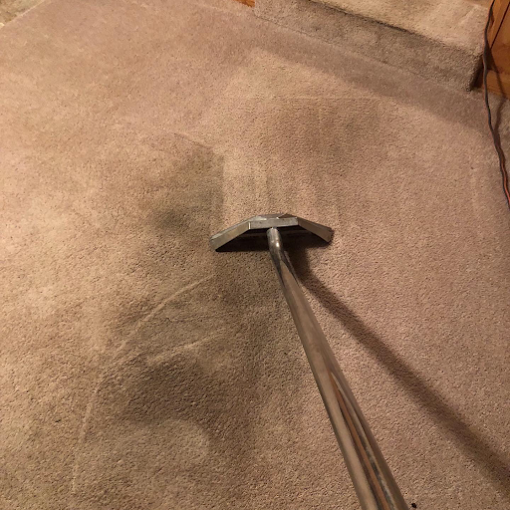
After the enzyme has time to work, we extract the treated material. Then we rinse the area to remove residue.
Stain-Specific Treatment
Some stains require additional steps. Tannin stains from tea or coffee need different treatment than protein stains from blood or vomit. Because each type responds to different solutions, we match the treatment to the stain.
Verification
Once the area is dry, we check for any remaining discoloration. Because humidity is the trigger for reactivation, we also discuss conditions that could cause the stain to return.
Why Store-Bought Products Often Fail
Many pet stain products only address the surface. Because they don’t reach the source, the stain returns.
They Mask Instead of Eliminate
Most sprays contain fragrances that cover the smell temporarily. Once the fragrance fades, the odor comes back. Similarly, surface cleaners lift the visible stain but leave the residue below.
They Don’t Reach the Source
Cleaning the carpet surface leaves the padding and subfloor untreated. Because those layers keep releasing residue, the stain reappears.
They Can Set the Stain
Some products contain ingredients that react with urine and set the stain permanently. As a result, the discoloration becomes harder to remove.
They May Damage Carpet
Harsh chemicals can break down carpet fibers or damage the backing. Therefore, using inappropriate products can create a new problem. If the carpet is already damaged, our carpet cleaning team can assess whether it can be restored.
When to Consider Carpet Replacement
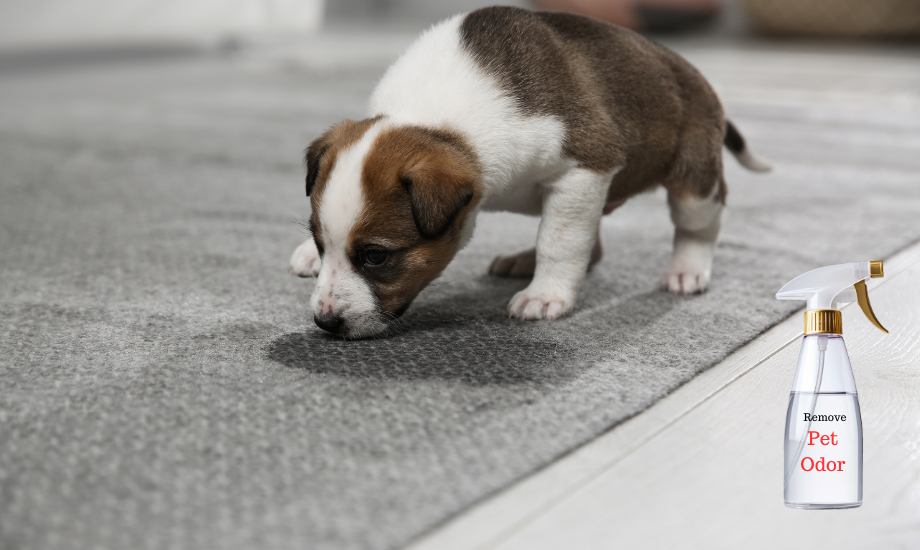
In some cases, the contamination is too extensive for cleaning to resolve. Replacement may be the more practical option.
When Replacement Is Recommended:
-
The padding and subfloor are heavily saturated.
-
Urine has spread across a large area over time.
-
The carpet has been wet repeatedly from accidents.
-
Stain and odor remain after multiple professional treatments.
If replacement is needed, our carpet cleaning team can advise on the transition. For rugs that have been affected, our area rug cleaning team can assess whether they can be saved. If the pet has also left stains on furniture, our upholstery cleaning service can help. For the odors themselves, our pet odor removal service addresses the source. For tile floors that need cleaning after treatment, our tile and grout cleaning service covers those surfaces.
Preventing Future Pet Stains
Treatment removes the current problem. However, prevention keeps it from returning.
Clean Accidents Immediately
The faster an accident is addressed, the less it penetrates. Blotting up as much as possible before treatment makes a difference.
Use Enzyme Cleaners for Spot Treatment
Because enzymes break down uric acid, they work better than standard cleaners on pet accidents. Look for products designed specifically for pet stains.
Manage Humidity Indoors
Keeping indoor humidity lower makes it harder for urine salts to reactivate. Because Radcliff Kentucky summers are humid, using air conditioning and dehumidifiers helps.
Address Pet Behavior
If the pet keeps returning to the same spot, the residual odor may be signaling it to do so. Thorough treatment eliminates that trigger.
Related Services
Pet stain removal often pairs with other cleaning services. If the odor has spread into the HVAC system, our air duct cleaning team can help. For tile floors that need cleaning after treatment, our tile and grout cleaning service covers those surfaces. If pet accidents led to mold growth, our mold remediation team can address it. For carpets that have been affected by water damage in addition to pet stains, our water damage restoration and water damage cleanup teams can help. For urgent water situations, our emergency water extraction team responds quickly.
Areas We Serve
Pile’s Carpet Care & Restoration Service provides pet stain removal throughout Hardin County and the surrounding Central Kentucky region. If you are in one of these communities, we are within reach:
Questions About Pet Stain Removal in Radcliff Kentucky
Why does the pet stain reappear after cleaning?
If the stain returns, the contamination was likely not fully removed. Because urine residue remains in the padding or subfloor, it wicks back to the surface when humidity rises. Enzyme treatment reaches those layers, but surface cleaning does not.
Can I remove pet stains with household products?
Household products typically lighten the surface stain but leave the residue below. Because the source is uric acid crystals, enzyme cleaners are the most effective option. For severe stains, professional treatment is usually required.
Will pet stain removal damage my carpet?
No, when done correctly. Enzyme treatments are safe for carpet fibers when applied properly. However, harsh chemicals can cause damage, which is why professional products are a better choice.
How long does pet stain removal take?
The timeline depends on the extent of contamination. Small stains may be treated in a couple of hours. Because severe cases may require multiple treatments, the process can take longer.
Do I need to replace my carpet if the stain is severe?
In some cases, yes. If the padding and subfloor are heavily saturated, replacement may be the more practical option. However, many carpets can be saved with professional enzyme treatment.
Can pet stains spread to other rooms?
Yes. Because urine wicks sideways below the surface, the contamination can extend beyond the visible spot. If the odor has reached the HVAC system, our air duct cleaning service can address it.
Do you also remove pet odors?
Yes. Along with pet stain removal, we provide pet odor removal to address the smell. Because treating both issues together is more efficient, we often handle them in the same visit.
Do you clean upholstery and rugs as well?
Yes. If pet stains have reached furniture, our upholstery cleaning team can help. For rugs that have been affected, see our area rug cleaning page. For the carpets themselves, our carpet cleaning service covers the full treatment.
Schedule Your Pet Stain Removal Today
Experience the Pile’s Carpet Care & Restoration Service difference for your pet stain removal needs. From carpet pet stain treatment to upholstery and area rug cleaning, our team delivers the expertise and results you need.
Contact us today to schedule your appointment. Whether you need Professional Carpet Cleaning, Mold Remediation, or Air Duct Cleaning, we’re here to help.
Call us or book online to experience professional pet stain removal backed by expertise, reliability, and long-term satisfaction.